

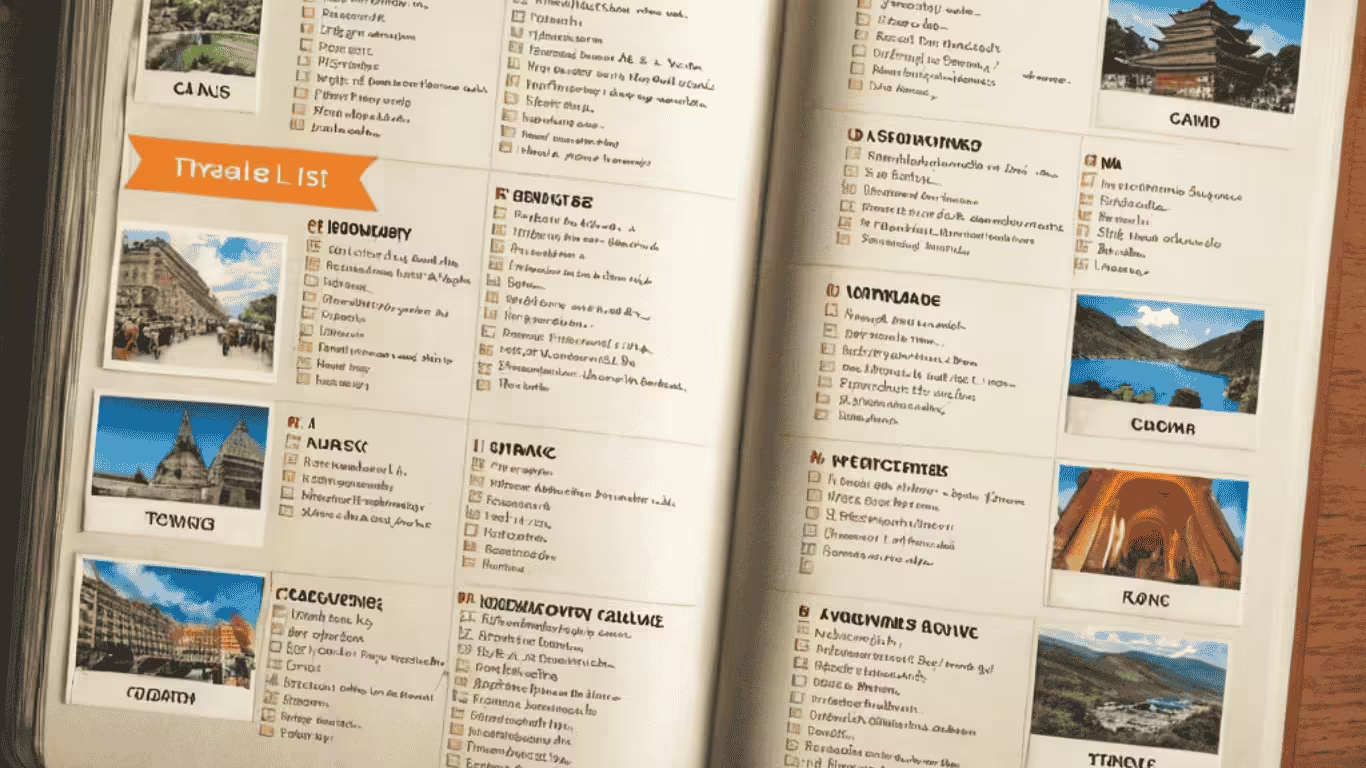
Introduction to Travel Vocabulary
Traveling, whether for leisure or business, necessitates effective communication, making travel vocabulary an essential aspect of the journey. A strong grasp of the vocabulary for travel and directions can significantly enhance interactions with locals, streamline navigation, and facilitate an overall enjoyable experience. Knowing the appropriate words and phrases empowers travelers to express their needs clearly and understand the responses they receive, thus minimizing misunderstandings and promoting smoother engagements.

For instance, when navigating new locales, familiarity with essential terms like “bus stop,” “train station,” or “airport” can assist in seeking critical transportation information. Additionally, understanding key phrases such as “where is?” or “how do I get to?” can alleviate the stress associated with finding one’s way. Mastery of these fundamental expressions not only bolsters confidence but also engenders a more enriching travel experience.
This lesson is designed to help learners build a solid foundation in travel-related vocabulary. By familiarizing oneself with commonly used terms and phrases, travelers can better interact with local customs and cultures. Moreover, knowing how to articulate directions or seek assistance can lead to more authentic connections with individuals met along the way. As travelers engage more deeply with the environment around them, they can gain valuable insights that add to the richness of their journey.
Overall, cultivating a robust vocabulary for travel and directions equips individuals with the tools needed to navigate their trips effectively. This lesson aims to instill confidence in using travel-related vocabulary, ensuring that learners are well-prepared for their upcoming adventures. As we delve into the various components of travel vocabulary, the benefits of effective communication while traveling will become increasingly evident.
Common Travel Terms
When embarking on a journey, certain vocabulary for travel and directions becomes essential for navigating various situations. Familiarizing oneself with common travel terms can significantly enhance the travel experience. Here are several important terms defined with context for their use during travel.
The term itinerary refers to a detailed plan or schedule of a journey, outlining the various destinations and activities planned during the trip. An itinerary is useful not only for travelers but also for travel agencies that curate experiences for their clients. Having a well-organized itinerary can ensure that travelers maximize their time and make informed decisions at each location they visit.
A reservation is a confirmed arrangement to secure accommodations, such as a hotel room or a flight seat, in advance. Making a reservation is a crucial step in planning any trip, as it guarantees that a traveler will have a place to stay or a seat on a specific flight, thus preventing inconveniences related to overbooking.
A boarding pass is an essential document that is issued by an airline, allowing passengers to enter the aircraft. This pass contains critical information such as the flight number, departure time, and gate number. Understanding how to obtain and use a boarding pass is vital in ensuring a smooth boarding process at the airport.
Luggage refers to the bags and suitcases that a traveler carries while on a journey. It is important for travelers to be aware of luggage allowances when flying, as different airlines have specific regulations regarding size and weight. Properly managing luggage can alleviate stress and enhance convenience during travel.
Lastly, a passport is a government-issued document that establishes a person’s identity and nationality for international travel. Possessing a valid passport is a requirement for crossing borders and is often requested by customs authorities. Understanding the passport application process is crucial for travelers planning international trips.
These common travel terms provide foundational knowledge, making travel more accessible and enjoyable. By integrating this vocabulary into their communication, travelers can enhance their interactions and navigate through various travel scenarios effectively.
Useful Phrases for Navigating Transport
When traveling, effective communication is essential to ensure a seamless experience across various modes of transport. Whether you are utilizing buses, trains, or planes, having the appropriate vocabulary for travel and directions can greatly enhance your journey. Here are some useful phrases that can assist you in navigating these transport systems with ease.
To begin with, acquiring tickets is often the first step. You might say, “Could I please have a ticket to [destination]?” Alternatively, if you require assistance, asking, “Where can I purchase a ticket?” is appropriate. It is advantageous to know whether the transport service accepts cash or cards, so you could inquire, “Do you accept credit cards?”

When it comes to understanding schedules, clear communication is key. A common phrase to express your needs is, “What time does the next bus/train leave?” If you seek clarification about delays, consider asking, “Is there a delay in the schedule?” These inquiries will help you stay informed about your transport plans.
Additionally, many travelers find themselves needing directions within transit hubs. You might ask, “Which platform does the train to [destination] depart from?” or “Where is the bus stop for route number [X]?” Understanding directional phrases can significantly ease your transition from one mode of transport to another.
For airplane travel, it is helpful to familiarize yourself with phrases related to boarding and baggage. You could ask, “Where is the boarding gate for Flight [number]?” or “What is the allowed baggage weight?” Knowing these specifics can prevent challenges during your travels.
In summary, mastering essential phrases related to transport can provide travelers with much-needed confidence and clarity. Integrating vocabulary for travel and directions into your communication skills will ensure that you navigate various transport systems more effectively, enhancing your overall travel experience.
Asking for Directions
When navigating unfamiliar places, knowing how to ask for directions can significantly enhance one’s travel experience. Familiarity with specific vocabulary for travel and directions helps facilitate effective communication. One common phrase that can initiate such interactions is, “Can you tell me how to get to…?” This open-ended question invites the listener to provide detailed guidance, making it an essential tool for travelers.
It is also beneficial to incorporate key directional terms into these conversations. Words such as “north,” “south,” “east,” and “west” are critical in understanding and providing location-based instructions. For instance, one might ask, “Is the museum to the north of here?” Utilizing these directional vocabulary terms can clarify the intended location and assist in crafting a mental map of the area.
Additionally, knowing basic verbs like “turn,” “go,” and “continue” is important when seeking directions. A traveler might say, “Should I turn left at the traffic lights?” or “Do I need to continue straight ahead?” These phrases improve clarity and make it easier for locals to respond accurately. A respondent may provide directions like, “Turn right after the bank, and it will be straight ahead,” ensuring that the traveler knows exactly what to do next.
It is also effective to reference notable landmarks. Phrases that include “near the park,” “next to the bookstore,” or “across from the station” help contextualize the directions. This method is not only informative but can also make conversations more engaging for both the traveler and the individual providing assistance.
Mastering these phrases and vocabulary for travel and directions can empower individuals to navigate new environments with confidence, thereby enriching their overall travel experience.
Traveling in a Foreign Country
Traveling in a foreign country can be an exhilarating experience, yet it presents unique challenges, particularly in communication. Having a solid grasp of vocabulary for travel and directions is essential for ensuring a smooth journey. Familiarizing oneself with common phrases can facilitate interactions in various scenarios, significantly enhancing the overall travel experience.
When it comes to ordering food, it is invaluable to learn basic dining vocabulary. Knowing how to ask for the menu, inquire about daily specials, or communicate dietary restrictions can greatly impact your culinary experiences. For example, phrases such as “What do you recommend?” or “I have a food allergy” can help bridge language barriers. Being adept in terms related to food and drink not only enhances one’s vocabulary for travel but also invites richer cultural experiences.
Other essential situations travelers often encounter include checking into hotels or lodgings. Proficiency in phrases related to hotel terminology, such as “I have a reservation” or “Can I see the room first?” is crucial. Moreover, understanding how to ask for assistance with luggage or room service allows for a more comfortable stay. Such vocabulary enables travelers to engage more effectively with hotel staff, ensuring a more enjoyable visit.
In case of emergencies, knowing specific vocabulary for urgent situations is vital. Being able to express you need help, or that you require medical attention, could make a significant difference during tricky circumstances. Learning key phrases like “I need a doctor” or “Where is the nearest hospital?” can save time and alleviate stress.
Thus, investing time in acquiring relevant vocabulary for travel and directions can truly elevate the travel experience. By engaging with the local language, travelers can foster connections with locals and embrace the culture of their destination more profoundly.
Cultural Etiquette and Vocabulary
Traveling to new destinations often involves navigating not only geographical landscapes but also cultural nuances that shape interactions. Language plays a vital role in fostering good relationships with local people, as well as enhancing one’s travel experience. Understanding basic vocabulary for travel and directions is essential, but it is equally important to grasp the cultural context surrounding those words. Polite phrases and expressions of gratitude can significantly impact how travelers are perceived and treated.
Among the most fundamental cultural phrases are greetings. In many cultures, a friendly “hello” and “thank you” can set a positive tone for a conversation. For example, in Japan, bowing while saying “Konnichiwa” (こんにちは) is a sign of respect. In contrast, in many Western countries, a firm handshake along with “nice to meet you” is considered polite. Recognizing such differences highlights the importance of cultural etiquette when using vocabulary for travel and directions.
Expressions of thanks are equally significant in showing appreciation for local hospitality. Using local phrases, such as “Merci” in France or “Grazie” in Italy, not only conveys gratitude but also shows respect for the local language and culture. Even the simplest phrases can yield positive interactions with locals, encouraging them to respond warmly and assist travelers further.
Additionally, basic vocabulary selections, tailored to fit cultural contexts, can prevent misunderstandings. For instance, the word “please” can soften requests, making them more polite. Understanding these subtleties, along with the proper usage of travel vocabulary, enhances one’s ability to engage meaningfully with others. In developing a deeper cultural awareness and honed vocabulary for travel and directions, travelers can immerse themselves more fully in the richness of their experiences abroad.
Building a Travel Vocabulary List
Creating a personalized vocabulary list for travel is a critical step in preparing for any journey. A well-structured list not only enhances communication but also boosts confidence when navigating new environments. To begin, it is essential to identify relevant words and phrases based on your travel itinerary. Consider the key activities you will be engaged in, such as booking accommodations, ordering food, or asking for directions. Each of these scenarios calls for specific vocabulary that can aid in effective communication.
After identifying pertinent topics, categorize these words into groups, such as transport terms, lodging-related vocabulary, or phrases useful in restaurants. This structured approach allows for easier recall and a more organized study method. For instance, under transport, include essential words like “bus,” “train,” “taxi,” or “airport,” while the lodging category can feature “hotel,” “reservation,” and “check-in.” Each category should encompass not just single words but also useful phrases relevant to your travel context.
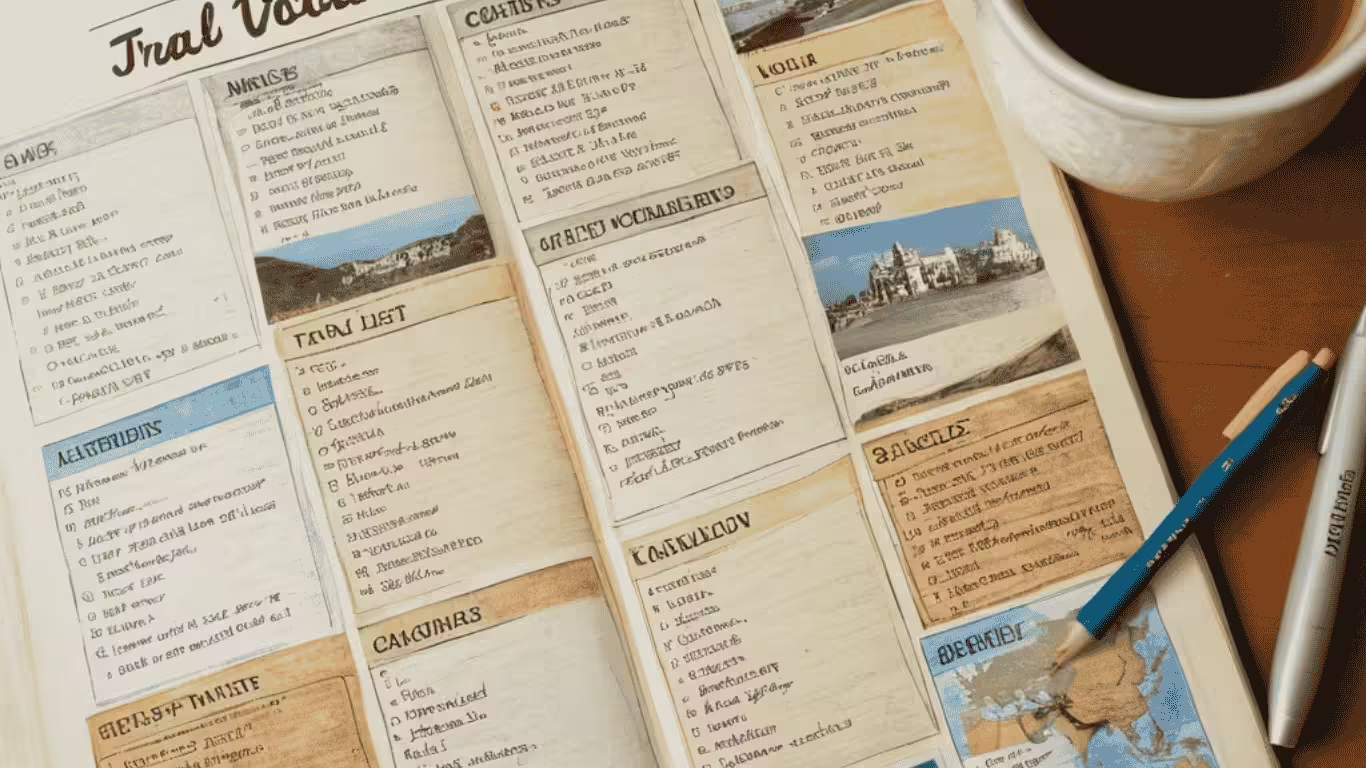
To reinforce your newly acquired vocabulary for travel and directions, utilize various resources and tools. Flashcards can be particularly effective, combining a simple visual aid with the power of active recall. Digital applications, such as language learning apps, seamlessly integrate vocabulary into your daily routine through engaging exercises and quizzes. Additionally, consider keeping a travel diary where you document new words learned and incorporate them into sentences, further solidifying your grasp of their meanings and contexts. By taking these steps—identifying relevant words, categorizing them effectively, and utilizing appropriate learning tools—you will create a personalized vocabulary list that serves as a valuable resource during your travels.
Practice Exercises for Vocabulary Retention
Engaging with vocabulary for travel and directions can be greatly enhanced through targeted practice exercises. These activities not only reinforce learning but also provide practical applications that will help in real-world scenarios. Below are several exercises designed to promote retention and comprehension of key terms.
1. **Matching Terms with Definitions**: Create a list of common travel-related terms such as “itinerary,” “boarding pass,” “reservation,” and “departure.” On a separate sheet, list their definitions. Your task is to match each term with its corresponding definition. This exercise will help solidify your understanding of the terms and their context in travel.
2. **Fill-in-the-Blank Sentences**: Construct sentences that include blank spaces where essential vocabulary should be filled in. For example: “We need to check the _________ for our flight schedule” (answer: itinerary). Create a list of at least ten sentences, ensuring that each sentence requires a travel-specific vocabulary word to complete it accurately. This type of exercise encourages you to contextualize the vocabulary within spoken or written communication.
3. **Role-Playing Scenarios**: Pair up with a fellow learner and engage in a role-playing exercise where one person acts as a traveler and the other as a travel agent or local guide. Use scenarios such as asking for directions, booking a hotel, or inquiring about local attractions. Incorporate as many vocabulary words related to travel and directions as possible. This immersive practice helps to develop fluency and confidence in using the specific vocabulary in context.
These exercises are critical in helping you internalize vocabulary for travel and directions. By actively engaging with these words through matching, filling in gaps, and role-play, you cement your understanding and become better equipped to use this vocabulary in real-life situations. Make it a habit to practice regularly, as repetition is key to retention.
Conclusion and Further Resources
As we have explored throughout this lesson on vocabulary for travel and directions, mastering the necessary lexicon is essential for effective communication while traveling. Whether you are navigating through bustling cities, seeking assistance at transportation hubs, or simply asking for directions, a robust vocabulary will significantly enhance your travel experience. Our examination of key terms and phrases has provided a solid foundation for engaging with locals and understanding your surroundings.
To continue expanding your knowledge, there are numerous resources available. Books focused on travel vocabulary are an excellent starting point. Consider titles that offer comprehensive glossaries of travel phrases, such as “English for Travel: A Complete Handbook” or “Phrasebook for Tourists.” These resources not only present important vocabulary for travel and directions but also provide context through practical examples.
Furthermore, websites dedicated to language learning, such as Duolingo and Babbel, offer specialized courses aimed at improving your travel-related vocabulary. These platforms often provide interactive lessons that are engaging and can be accessed at your convenience. Mobile applications, such as TripLingo, are also invaluable for travelers seeking to learn phrases specific to their destination, complete with audio pronunciations and cultural tips.
Participating in online forums and communities focused on travel, such as the Lonely Planet’s Thorn Tree forum, can further bolster your learning. Engaging with fellow travelers opens up opportunities for practical advice and shared experiences regarding vocabulary usage in real-life situations. Remember, the journey to mastering vocabulary for travel and directions is a continual process, and with the right resources, your proficiency will grow. Explore these suggested avenues, and you will be well-equipped for your future travels.


[…] food and dining vocabulary is a fantastic way to boost your English skills, especially if you love exploring different […]